Thermal and airflow optimization of server rooms
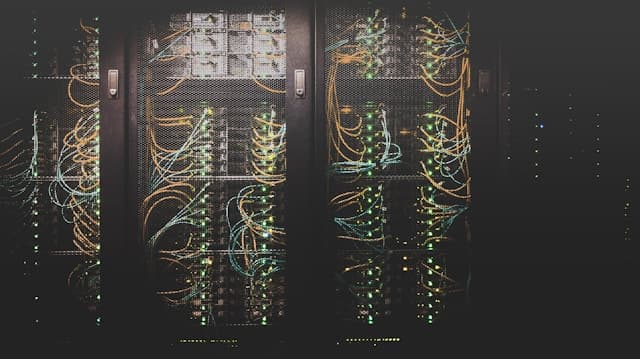
Context
With the growing density of IT equipment and increasing energy concerns, data centers must optimize their cooling systems to ensure hardware reliability while reducing energy consumption. code_saturne enables precise simulation of airflow, temperature distribution, and complex thermal phenomena within cold/hot aisles, server racks, and ventilation infrastructures.
Workflow overview
Step 1: Data collection
- Server room geometry (racks, cold and hot aisles, walls, ceilings, raised floors)
- Input data: airflow rates from cooling units (CRAC/CRAH), server heat dissipation
- Measured temperatures and air velocities for model validation
- Airflow configuration (supply, exhaust, recirculation)
Step 2: Modeling with code_saturne
- 3D mesh creation (e.g., using Salomé)
- Boundary condition setup: air inlets/outlets, heated surfaces (racks), etc.
- Configuration of turbulence models, viscosity, and heat transfer settings
- Stationary or transient simulations depending on the desired level of detail
Step 3: Scenario simulation
- Visualization of hot spots and under-cooled zones
- Analysis of temperature distribution in the cold aisle
- Identification of hot air recirculation or thermal short circuits
- Comparison of various ventilation layouts or server arrangements
Step 4: Prediction and optimization
- Quantification of localized overheating risks (hotspots)
- Evaluation of colling improvement strategies
- Cold aisle containment
- Airflow rate adjustments
- Rearrangement of high-heat-density servers
- Integration into a full-scale digital twin of the data center (via coupling with system or energy models)
Outputs and impact
Key outputs
- 3D temperature maps
- Streamline and airflow velocity visualizations
- Precise hotspot localization
- Balanced airflow across aisles and racks
Decision support
- Lower operating costs (reduced overcooling)
- Improved hardware availability and reliability
- Simulation-guided design from the early layout phase
- Support for energy certification (e.g., ISO standards)
Example projects
- Assessing the impact of various ventilation layouts before setting up a new server room
- Energy retrofit of an existing data center by identifying inefficient zones
- Feeding a digital twin to dynamically adjust cooling based on real-time IT load
Advantages of using code_saturne
- Well-suited to internal airflow simulations in complex volumes
- Accurate modeling of convection and thermal conduction phenomena
- Compatible with advanced meshing and post-processing tools (Paraview, Salomé)