code_aster and Salomé applied to civil engineering
January 12-13, 2027
Course summary
See the course pageDo you recognize yourself?
- You want to switch to open-source code for better technological control and a cost advantage, but you don't know where to start or how to structure your first simulations.
- You run mechanical simulations that fail to converge or produce inconsistent results: poorly defined boundary conditions, incorrect material properties, contact or non-linearity issues… and you spend hours trying to figure out what's going wrong.
- You struggle to interpret .mess files and solver messages: has the simulation actually converged? Are the Newton iterations acceptable? Are the results physically consistent?
- You want to go beyond tutorials and fully master code_aster to adapt it to your industrial use cases: automating simulations, chaining multiple analyses, running parametric studies, or integrating the solver into a broader simulation workflow.
Why our training in particular?
Theory revisited, immediate practice
Two days of hands-on practice backed by a review of theoretical fundamentals. Each practical exercise is more demanding than the previous one: you progress in concrete steps, from discovery to industrial-level work — not through slides.
From installation to post-processing: the complete workflow
You learn to operate and master the tools (Salomé, code_aster and Paraview) together, as in your day-to-day work. Not just the solver: the entire simulation chain.
Practitioner trainers, in front of you
Our engineers and PhDs use code_aster daily on industrial projects at Simvia. In person, they share with you live the best practices, the pitfalls to avoid and the troubleshooting tips you won't find in any documentation.
Close-knit supervision
1 trainer for a maximum of 8 trainees during practical work. When you get stuck, an expert is right beside you.
A network, not just a training course
The inter-company format brings together engineers from different sectors and backgrounds around the same challenges. You exchange feedback, compare approaches and leave with a network of peers who share your technical day-to-day.
Audience
- Corporate: engineers and technicians with a basic understanding of the physical and digital aspects covered by the course.
- Academic: researchers, PhD students and students at higher education and research institutions.
Prerequisites
Fundamentals of continuum mechanics and finite elements.
Detailed programme
Day 1 – Morning: Overview of code_aster capabilities for Civil Engineering
Theoretical part:
- Overview of code_aster capabilities
- How code_aster works
- Scripting capabilities in code_aster
Practical part:
- Linear elastic calculation
Day 1 – Afternoon: Structural analysis
Theoretical part:
- In-depth look at structural elements and connection conditions
- Post-processing tools in code_aster
Practical part:
- Design of reinforced concrete slabs under self-weight
Day 2 – Morning: Modal analysis and dynamic calculation
Theoretical part:
- Theoretical review of modal analysis and dynamic calculation
- Implementation in code_aster
Practical part:
- Calculation of a modal basis
Day 2 – Afternoon: Seismic load design
Theoretical part:
- Theoretical review of seismic load design
- Implementation of the spectral approach for structural design
Practical part:
- Seismic design of a building
Practical details
- Dates
- January 12-13, 2027
- Duration
- 2 day(s)
- Location
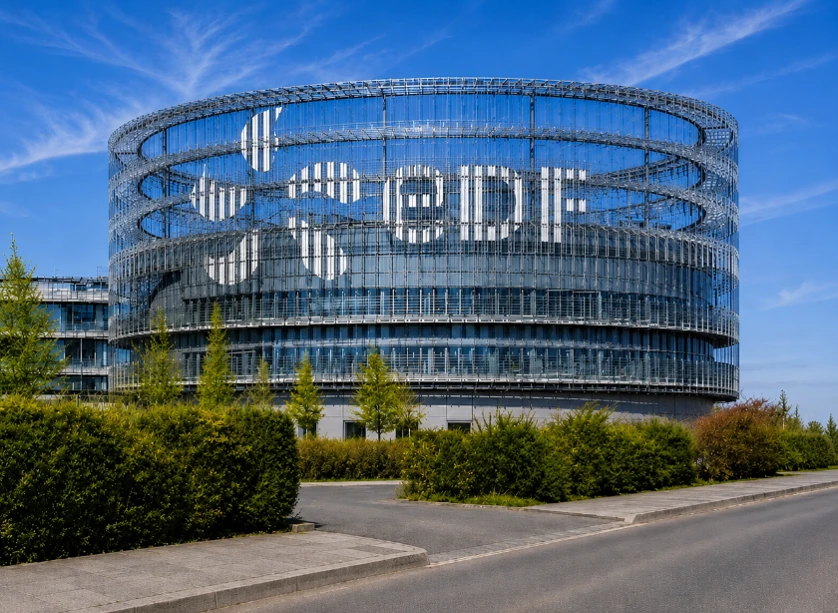
- EDF Lab Paris-Saclay
- Language
- French
- Hours: 9:00 to 12:30 and 14:00 to 17:00.
- On site: EDF Lab Paris-Saclay (Palaiseau), lunches and coffee breaks included. Remote: two days one week apart, to practise in between.
- Language: spoken French with English material (remote sessions in English).
- Each trainer supervises at most 8 trainees during hands-on work.
- Help installing the latest version of the code and certificate of completion.
Performance indicators
- Trained participants
- -
- Attendance rate
- -
- Satisfaction rate
- -
- Success rate
- -
Accessibility
We are committed to making our training accessible to people with disabilities. Every situation is unique, so please contact us before registering so that we can study together the educational, technical or organisational adaptations that can be put in place.
More info

Walter Casas
I am a civil engineer specialized in structural analysis and numerical simulation, with over 5 years of experience in the nuclear sector. Expert in finite element analysis using code_aster, I am proficient in both linear and non-linear approaches for the design and verification of complex structures subjected to extreme seismic loadings. My background has provided solid expertise in applying nuclear regulations (RCC-CW, EDF capacity guide) and Eurocodes. Passionate about open-source tools and advanced computational methods, I support industrial clients in their numerical simulation challenges.
Learn morePricing
Included: lunches, coffee breaks, help installing the latest version of the code...